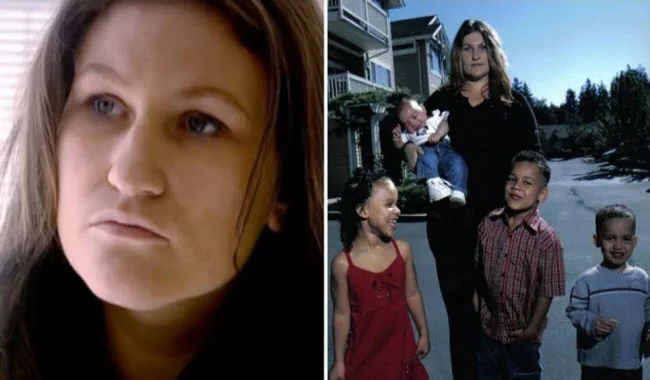
Sometimes, reality can contradict what official documents and government records appear to show, leaving people confused about which version is correct. Fortunately, science can help uncover the truth and provide decisive answers to such disputes. Our world is full of unusual stories that illustrate these contradictions, and one of the most remarkable is the case of American woman Lydia Fairchild, who fought a fierce legal battle to prove that her children were hers, even though DNA tests appeared to rule out that possibility. As the dispute escalated, science ultimately provided the answer, bringing the case to an astonishing conclusion.
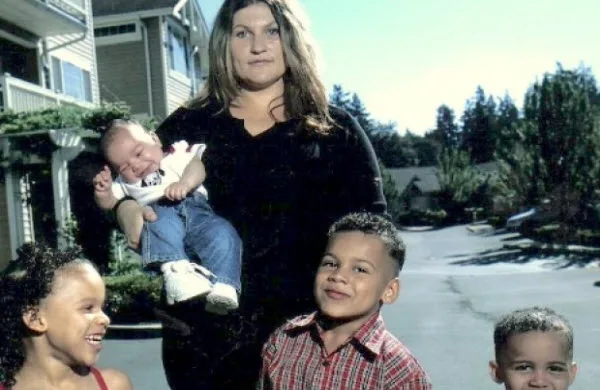
The story began in 2002, when Lydia Fairchild, a 26-year-old American woman living in Washington State, decided to separate from her boyfriend, Jamie Townsend, after several years of a troubled relationship. They had two children together, and Lydia was pregnant with their third. Determined to care for and support her children, she applied for government assistance. The regulations required both her and her former partner to undergo DNA testing to establish the children’s parentage. Lydia took the test as a routine formality, fully expecting the results to confirm what she already knew: that she was their mother. However, when she went to the social services office to collect the results, she was surprised to find the staff looking at her suspiciously. When she asked why, they explained that the DNA results confirmed the father’s biological relationship with the children, but did not establish that Lydia was their mother.
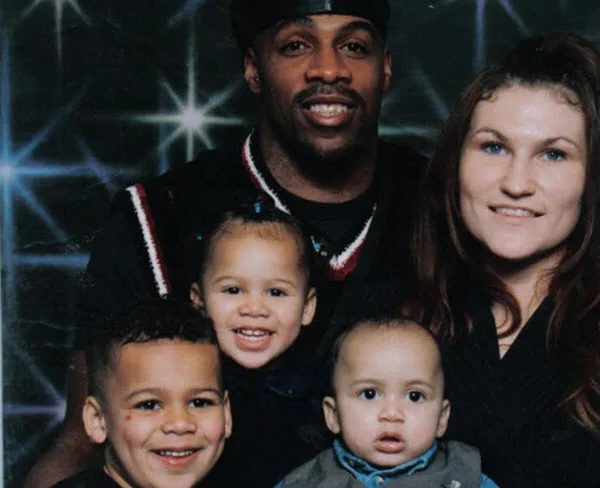
Lydia was stunned. At first, she laughed, assuming the officials were joking, but they insisted that the test results were accurate and that she was not the children’s mother. They began questioning her about whether the children were really hers and where she had obtained them. The matter soon took on the character of a criminal investigation, and she was accused of fraud. Distraught, Lydia called her parents and told them what had happened, fearing that the authorities might take her children away because the tests appeared to show that she was not their mother. Her own mother initially thought Lydia was joking, since she had been present when the children were born and could not understand how her daughter could be told she was not their mother. The family contacted the doctor who had delivered the children, and he confirmed that they were Lydia’s and promised to testify in her favor in court. To rule out the possibility of a laboratory error, Lydia underwent three additional DNA tests at different laboratories. All three produced the same startling conclusion: the tests did not identify her as the children’s biological mother.
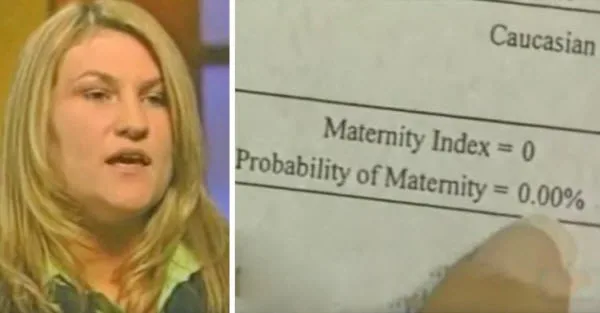
Although the situation was bewildering, Lydia was first and foremost a mother, and she was determined to fight to keep her children. She took her case to court to establish their parentage. During the legal proceedings, she gave birth to her third child. Immediately after the delivery, a court-appointed official who had witnessed the birth collected DNA samples from Lydia and the newborn. The test should have confirmed beyond doubt that she was the baby’s mother. Instead, the results were just as astonishing as before: they again indicated that Lydia Fairchild was not the child’s mother.
The case had become a baffling mystery, and Lydia faced the possibility of losing all her children, including the baby whose birth had been witnessed by a court official. Matters grew increasingly complicated until her lawyer, Alan Tindell, introduced a surprising lead. He pointed to the similar case of another woman named Karen Keegan. Karen, a mother of three, was preparing to undergo a kidney transplant and hoped that one of her children might be a suitable donor. DNA testing, however, unexpectedly suggested that two of her children were not biologically hers, even though everyone knew they were her children. Scientists began investigating the puzzle and, after a series of tests, concluded that Karen had a very rare medical condition known as chimerism. This condition involves a person having at least two genetically distinct populations of cells in one body, as though two individuals with different genetic characteristics were living within the same person.

Inspired by Karen’s case, Lydia’s lawyer presented the court with scientific evidence explaining the condition. Lydia underwent further tests, which confirmed that she, too, had chimerism: her body contained different genetic cell populations. This evidence finally convinced the court that the children were indeed hers, and the court legally recognized their parentage. Lydia could finally breathe a sigh of relief. After the ruling, she expressed her gratitude to God, saying that without Karen’s story, she might not have her children with her today.