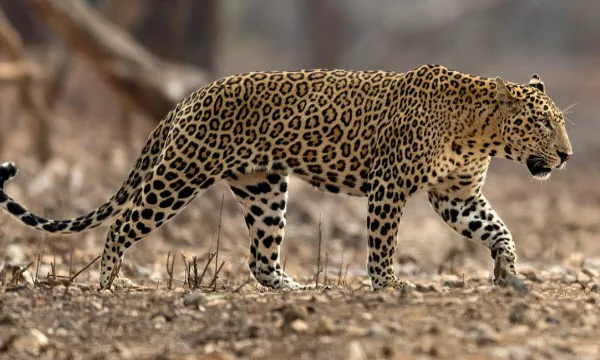
The leopard is a mammal and one of the smaller members of the big cat family, which includes lions, tigers, and jaguars. It is one of the fastest and most widely distributed wild cats on Earth, inhabiting a vast range across sub-Saharan Africa, parts of western and central Asia, southern Russia, the Indian subcontinent, and Southeast and East Asia. Whenever people hear the word “leopard,” they often picture this spotted big cat crouching on a tree branch while waiting for prey, or silently moving through the dry savanna grass as it approaches its chosen target. Stealth and silence are among the animal’s best-known characteristics. Leopards have existed on our planet for a very long time, with some of the oldest leopard fossils discovered in Europe estimated to be around 600,000 years old, dating back to the late Early Pleistocene. Humans have long admired and valued this animal, incorporating it into various cultures and using it as a national symbol and an emblem for numerous organizations and companies.
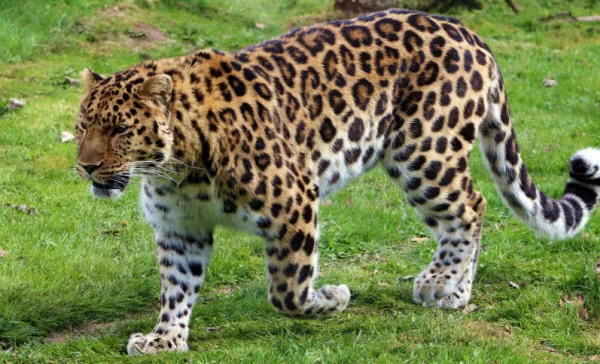
The leopard has a body structure similar to that of the jaguar, and its coat is covered with spots arranged in rosette-shaped patterns. Unlike the jaguar, however, leopard rosettes do not usually have a central spot. These markings help leopards camouflage themselves from prey in forests and grasslands. Leopards living in dry grasslands tend to have lighter coats than those inhabiting rainforests. Some rainforest leopards are almost entirely black, although their spotted patterns can still be seen under certain lighting conditions. Despite being powerful and intelligent hunters, leopards are not always at the top of the food chain in Africa, where lions and groups of hyenas or wild dogs can kill them. In Asia, tigers pose a similar threat. Leopards go to great lengths to avoid these predators, hunting at different times and often targeting different prey from their competitors. They also rest in trees to remain out of sight.
Leopards adapt easily to a wide range of habitats, elevations, and temperatures, from high mountains and deserts to rainforests. Some are named after the regions where they are found, such as the North African leopard and the Persian leopard. They can survive without drinking water for up to 10 days by obtaining the moisture they need from their food. They spend much of their time among dense vegetation, in caves, or on rocky terrain, where they hunt, rest, or hide from the daytime heat. Leopards are among the most arboreal of the big cats, and their long tails help them maintain balance on tree branches. Unlike most cats, they are strong swimmers, and they are among the few felines that enjoy being in water. They are also exceptional athletes, capable of running at speeds of up to 58 kilometers per hour, leaping forward as far as 6 meters in a single bound, and jumping straight up to a height of 3 meters.
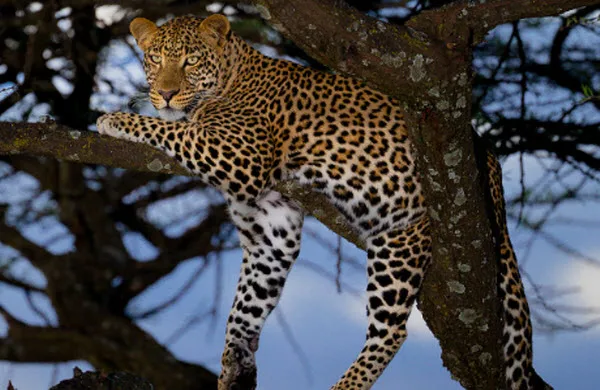
Leopards possess incredible strength. They can climb as high as 15 meters up a tree while carrying something in their mouths, even if it is larger and heavier than they are. They often drag their prey into trees to keep it away from other predators, such as lions and hyenas, allowing them to return and feed on it later. One leopard was reportedly seen dragging a young giraffe weighing 100 kilograms up a tree to hide it.
Leopards are generally nocturnal, hunting at night and resting during the day. Stories from Africa and Asia describe leopards entering villages and snatching sleeping prey without being detected. They use a variety of stealthy hunting techniques, ambushing prey from trees or stalking it through dry grass. When hunting, they rely on their hearing and eyesight rather than their sense of smell. Once they reach their prey, they seize it or strike it with their retractable claws before killing it with a bite to the throat. Their diet includes a wide range of meat-bearing prey, such as monkeys, rodents, snakes, amphibians, large birds, fish, antelopes, and pigs.
During the mating process, adult males and females locate one another through scent. A male may follow a female for several days before she is ready to mate. This can be somewhat dangerous because both animals have sharp claws and teeth and know how to use them. During pregnancy, the female uses a cave, a burrow, or an opening in dense vegetation as a den. After giving birth, she usually remains with her cubs for two or three days before venturing out to find food for them. Leopard cubs are born with a light coat of fur and their eyes closed. As they grow, their mother may need to leave them alone for several days while hunting.
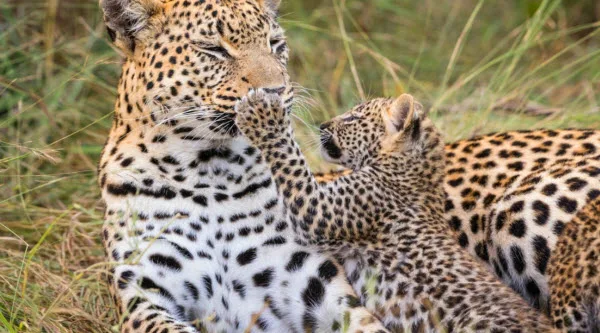
At around three months of age, cubs begin accompanying their mother to learn hunting skills. Like other young cats, they enjoy chasing and pouncing. When prey escapes, they practice these behaviors on their siblings and even on their mother, helping them develop the skills they will need to survive as adults. Young leopards are generally ready to live independently between 12 and 18 months of age and can begin raising their own families at two to three years old. Leopards rarely roar. They communicate partly through the white markings on the tips of their tails and the backs of their ears, which help them locate one another. Except during the breeding season, they live solitary lives and mark their territories with urine, rubbing their faces against rocks or tree trunks, scraping or rolling on the ground, and clawing tree bark to warn other leopards that the area is occupied. Fights between males are common and can sometimes be fatal.
Although leopards are adaptable animals capable of living in different habitats, some populations are under serious threat. They are hunted for their valuable skins and for their whiskers, which are used in traditional medicine. Trees are also cleared from leopard habitats to make way for development projects. Because leopards sometimes prey on livestock, farmers seeking to protect their animals frequently poison them. Many countries have therefore introduced measures to protect leopards. In the United States, the Endangered Species Act and international wildlife trade regulations help protect them. Other countries have established reserves and introduced strict laws against harming them. Fortunately, these conservation efforts have helped preserve leopard populations as much as possible.
Leopard Fact File
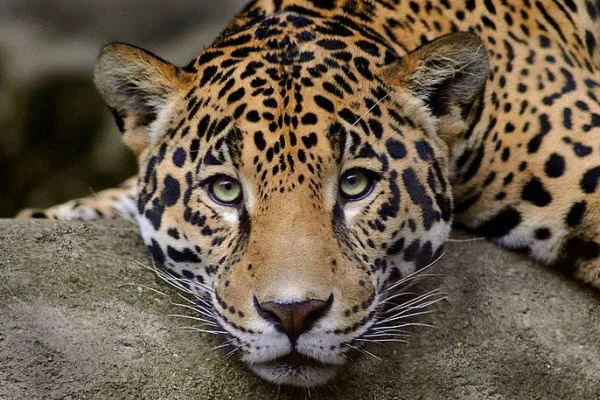
- Class: Mammals
- Order: Carnivores
- Family: Felidae
- Lifespan: An average life expectancy of around 18 years under human care
- Gestation period: Approximately 3 to 3.5 months
- Litter size: 1 to 6 cubs, usually 2 to 3
- Birth weight: 500–600 grams
- Age of maturity: 3 years
- Body length: 92–190 cm
- Weight: Females weigh 21–60 kg, while males weigh 36–75 kg
- Tail length: 64–99 cm
Quick Facts About Leopards
- Leopards have exceptionally sharp hearing, reportedly up to five times as sensitive as human hearing, allowing them to detect the squeaking sounds made by mice.
- When it is time to rest, leopards enjoy climbing trees and stretching out along the branches. They are among the largest cats that regularly climb trees.
- Although snow leopards and clouded leopards have the word “leopard” in their names, they are sufficiently different from true leopards to be classified separately within the cat family.