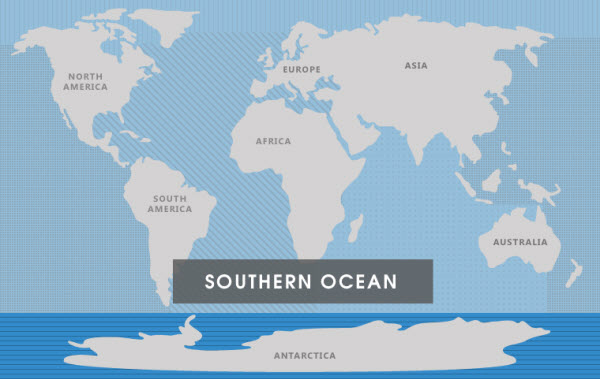
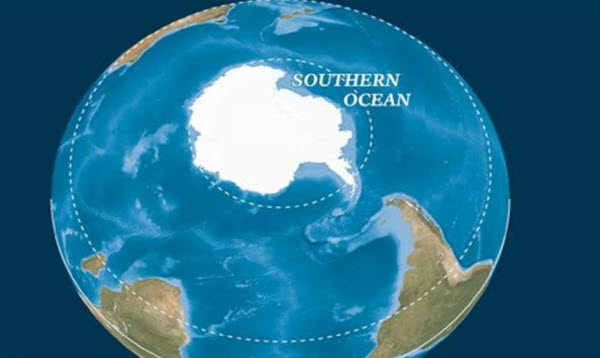
The Southern Ocean, also known as the Antarctic Ocean, ranks as the fourth largest of Earth’s oceanic divisions, following the Pacific, Atlantic, and Indian Oceans. It is characterized by its expansive waters surrounding the continent of Antarctica. Although the term “Southern Ocean” was used by sailors and marine researchers in the past, its official recognition by the scientific community came only recently. The Southern Ocean covers approximately 20.3 million square kilometers. For a long time, geographers debated its northern boundaries or even denied its existence, considering it part of the three major oceans. However, consensus has emerged that its boundaries are defined by the area where the cold waters from the Antarctic mix with the warmer waters of the Southern Hemisphere. Over the past thirty years, this ocean has faced several threats due to global warming, pollution, and the ozone hole, leading to rapid climatic changes that have impacted its marine ecosystem. This situation necessitates urgent international agreements to mitigate these risks.
Historical Context of the Southern Ocean
The history of the Southern Ocean is closely tied to the debate over its classification as a separate ocean. The name “Southern Ocean” was first introduced by Spanish explorer Vasco Núñez de Balboa, who was the first European to discover it. The term was officially recognized in 1937 when the International Hydrographic Organization published the second edition of its Limits of Oceans and Seas. However, in the third edition published in 1953, the term was omitted. The International Hydrographic Organization felt it was incorrect to define it as such at that time, given the belief that the ocean should be described as “water surrounded by land” rather than “water surrounding land.”
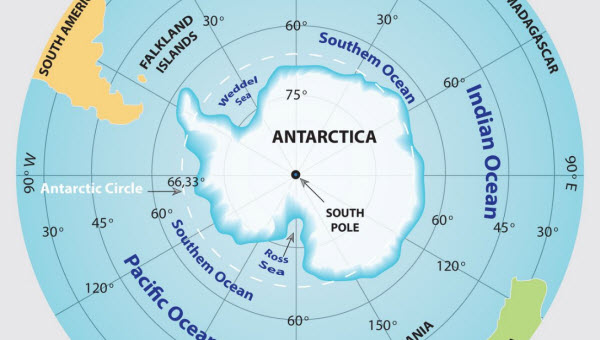
In 2000, the issue was revisited, and by a majority vote, the term “Southern Ocean” was chosen over “Antarctic Ocean,” which was commonly used at the time. The majority also agreed that the Southern Ocean should be defined as extending to 60 degrees south latitude, contrary to the minority opinion favoring 35 degrees south latitude.
In Australia, the definition and boundaries of the Southern Ocean differ. Australian authorities depict it on maps as encompassing all the waters between Antarctica and the southern coasts of Australia and New Zealand, extending to 60 degrees south latitude.
Geographical Features of the Southern Ocean
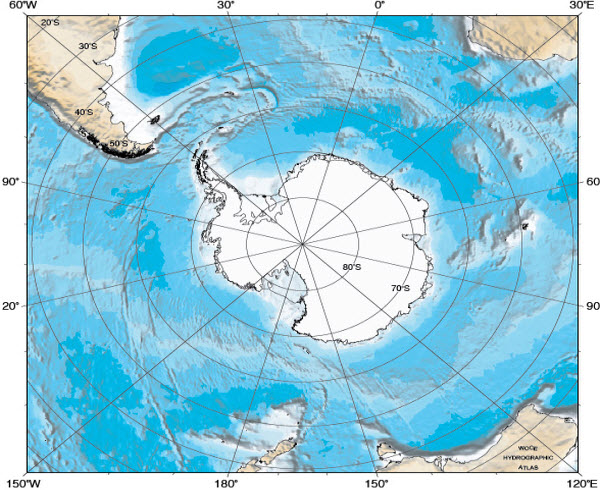
The Southern Ocean is located at the extreme edge of the Southern Hemisphere and is heavily influenced by seasonal solar effects. During the colder months, when the sun does not directly shine on the ocean, ice sheets melt to a low average of 2.6 million square kilometers. When the sun moves away, temperatures drop, and ice packs rebuild. The ocean features a narrow and deep continental shelf, with average depths ranging between 4,000 and 5,000 meters.
The Southern Ocean contains several seas and straits, including the Weddell Sea, the largest by area; the Ross Sea, the smallest by area; the Bellingshausen Sea; the Amundsen Sea; the Lazarev Sea; the Riser-Larsen Sea; the Davis Sea; the Mounson Sea; the Dumont d’Urville Sea; the Somov Sea; the Scott Sea; and parts of the Drake Passage and the Bransfield Strait.
Geological Aspects of the Southern Ocean
Many oceanographers consider the Southern Ocean to be one of the youngest oceans, having formed only about 30 million years ago due to tectonic activity. Specifically, it resulted from the separation of Antarctica and South America during the early stages of Earth’s development. When the plates separated, they opened the Drake Passage, allowing the formation of the Antarctic Circumpolar Current—a distinctive feature of the Southern Ocean. This current helps maintain water flow around Antarctica and plays a significant role in the debate over its status as a distinct ocean. Some scientists argue that the current separates its waters from those of the Atlantic and Pacific Oceans, while others believe it complicates the naming issue by influencing and being influenced by the surrounding climate.
Characteristics of the Southern Ocean
Salinity
The Southern Ocean is the least saline of all oceans except the Arctic Ocean, with an average salinity of less than 34 parts per thousand. This is due to ice melting, rainfall, and significant variations in solar radiation and energy flow caused by the sea ice cover.
Climate
Temperatures in the Southern Ocean range from -2 to 10 degrees Celsius. The region frequently experiences storm systems similar to hurricanes, caused by temperature contrasts between ice and open water. These storms are extremely harsh compared to other regions on Earth. Additionally, the presence of numerous icebergs poses a threat to navigation throughout the year, some extending hundreds of meters. Maritime vessels must exercise extreme caution when navigating this area.
Economic Aspects of the Southern Ocean
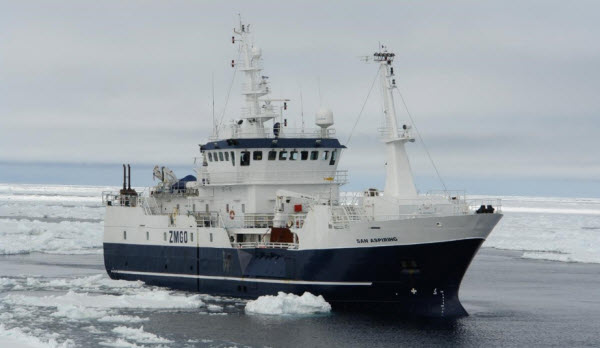
The Southern Ocean is commonly used as a route to access oil and natural gas fields along its continental margins. It also harbors significant energy resources and mineral wealth. Fishing fleets operate in these waters, which are rich in various fish species sold on global markets. In the period between 1998 and 1999, fish catches exceeded 120 tons. The ocean also hosts numerous marine creatures such as squid, whales, and seals. The icebergs formed annually in the Southern Ocean contain enough freshwater to meet the needs of the global population for months. For decades, there have been proposals to transport these icebergs to drier regions like Australia, though none have been successful or practical.
Threats to the Southern Ocean
The Southern Ocean faces numerous threats to its natural marine ecosystems. The most significant threat is the influx of ultraviolet radiation from the ozone hole over the South Pole. As this hole expands, UV levels increase, reducing phytoplankton productivity. Another major threat is unregulated overfishing, which negatively impacts fish stocks. The Southern Ocean is subject to all international agreements concerning the world’s oceans, as well as specific agreements such as the whaling ban, seal hunting restrictions, and the prohibition of mineral resource exploration and exploitation south of the fluctuating Antarctic Convergence, which separates the very cold polar waters from the warmer northern waters.

