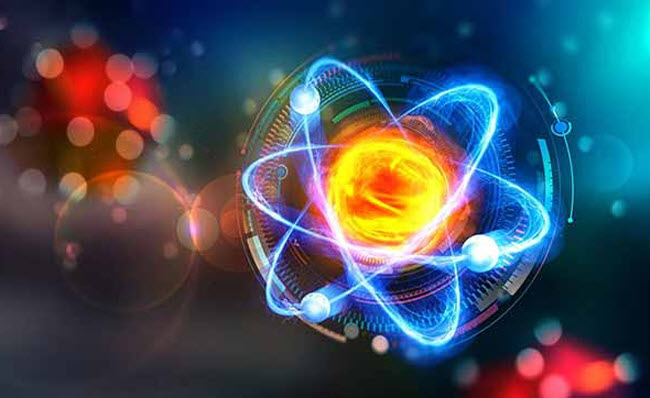
Nuclear energy is energy released in large amounts through reactions involving the nucleus of an atom. This energy can be obtained and released through a process called nuclear fission, which takes place under strict supervision inside nuclear reactors. It is also produced through nuclear fusion, which occurs inside the Sun. Nuclear energy has a positive side when used for peaceful purposes, such as generating electricity at power plants, but it also has a negative side when used for military purposes as a weapon of mass destruction, as happened when atomic bombs were dropped on Hiroshima and Nagasaki during World War II. Another example of its dangers was the Chernobyl nuclear reactor disaster in the Soviet Union in the mid-1980s.
Nuclear Fission
Nuclear energy is released through a process known as nuclear fission, which takes place inside nuclear reactors. A reactor is a facility containing a series of machines that control the fission process. Its fuel consists of compounds of uranium, whose atoms are made to split apart. When an atom splits, it releases smaller particles called fission products, which can cause other uranium atoms to split. This initiates a chain reaction that generates heat.
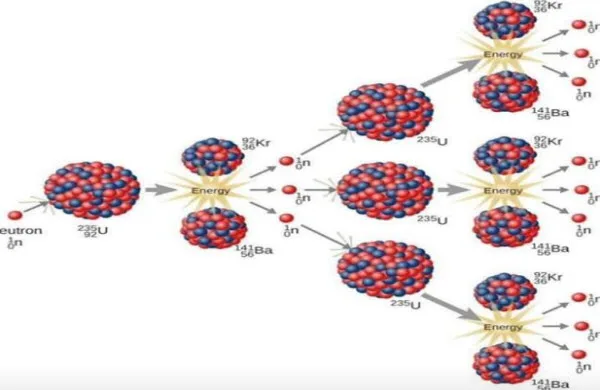
The heat is used to warm the reactor’s coolant, which is usually water, a liquid metal, or molten salt. The heating process produces large amounts of high-pressure, high-temperature steam. This steam turns turbines, which are wheel-like machines that drive generators or motors to produce electricity.
Nuclear Fusion
In nuclear fusion, hydrogen atoms combine to form helium, releasing enormous amounts of thermal energy. These reactions occur naturally inside the Sun, and nuclear fusion is therefore one of the processes that makes life on Earth possible.
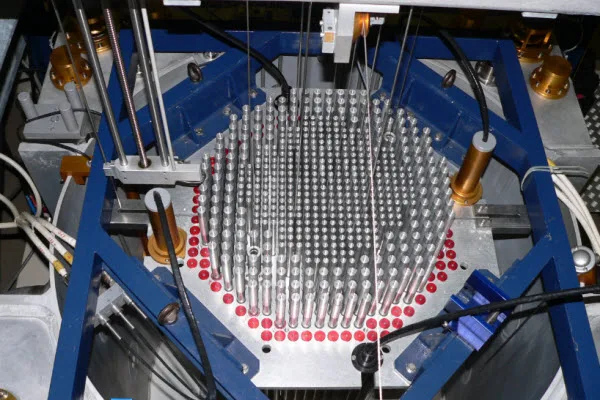
At present, nuclear power plants cannot produce energy through nuclear fusion safely and reliably on a commercial scale. It is also unclear whether fusion will become a practical option for electricity generation in the future. Nevertheless, nuclear engineers continue to conduct research and experiments to harness fusion reactions, as this technology could potentially be safe and cost-effective.
Uranium
Uranium is the most widely used fuel for producing nuclear energy because its atoms can be split relatively easily. It is a common element found in rocks throughout the world. However, the particular type of uranium used to produce nuclear energy, known as U-235, is very rare, accounting for less than one percent of the world’s uranium.
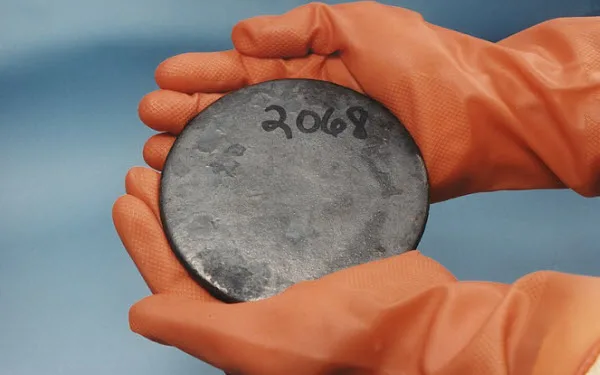
Although the United States uses uranium mined within its own territory, it relies heavily on imports from Australia, Canada, Kazakhstan, Russia, and Uzbekistan. Uranium is extracted alongside other minerals and must be processed before it can be used.
Because uranium can be used as nuclear fuel to produce weapons of mass destruction, the international trade and use of uranium and plutonium—another nuclear fuel—are subject to safeguards and international agreements. The Treaty on the Non-Proliferation of Nuclear Weapons (NPT) promotes the peaceful use of nuclear technology while seeking to prevent the spread of nuclear weapons.
A typical nuclear reactor generally uses around 200 tons of uranium each year. Some complex processes allow uranium and plutonium to be reprocessed or recycled for reuse, reducing dependence on newly mined materials and lowering extraction, processing, and transportation costs.
Nuclear Energy and Society
Nuclear energy generates electricity that can supply homes, schools, businesses, hospitals, and factories. The first nuclear reactor designed to produce electricity was built near Arco, Idaho, in the United States, and began operating as an experimental reactor in 1951. The first nuclear power plant in Russia was established in Obninsk in 1954.
Building nuclear reactors requires advanced technology. Because nuclear materials can also be used in weapons, their production, trade, and use are subject to international controls and agreements. For these reasons, most nuclear power plants are located in developed countries.
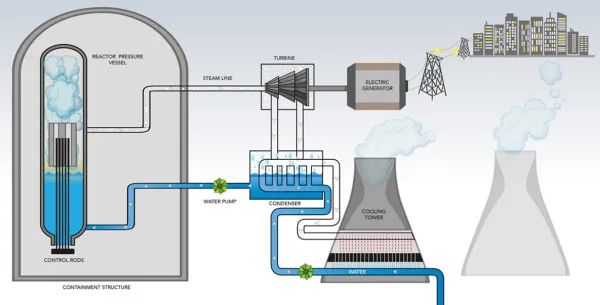
Nuclear energy is often described as a clean source of electricity because nuclear power plants do not directly release greenhouse gases during electricity generation in the way that fossil-fuel power plants do. They can be built in urban or rural areas, and their routine air-pollutant emissions are low, so they do not necessarily cause major changes to the surrounding environment.
In a nuclear power plant, steam used to drive turbines and generators is condensed in a separate structure known as a cooling tower or condenser. The steam turns back into water and can be used again to generate more electricity. Excess steam may be released into the atmosphere and is largely water vapor.
However, nuclear energy also produces radioactive materials. These contain unstable atomic nuclei that can affect living organisms and the environment. Exposure to high levels of radiation can cause serious harm, including burns and an increased risk of cancer, blood disorders, and bone damage.
Radioactive Waste
Nuclear reactors also produce radioactive waste, which includes materials left over from reactor operations. Such waste may consist of protective clothing worn by workers, tools, and other materials that have come into contact with radioactive substances.
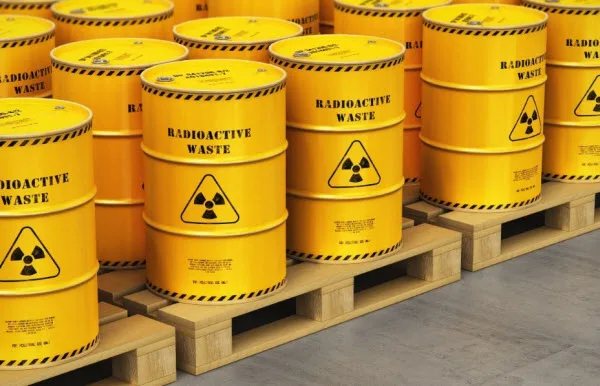
Some radioactive waste remains hazardous for thousands of years. Governments therefore establish plans for handling and disposing of these materials to prevent contamination of the surrounding environment.
Spent nuclear fuel and highly radioactive control rods are stored in specially designed facilities, including water-filled pools that resemble large swimming pools. Some nuclear power plants also store spent fuel in dry-storage containers above ground.