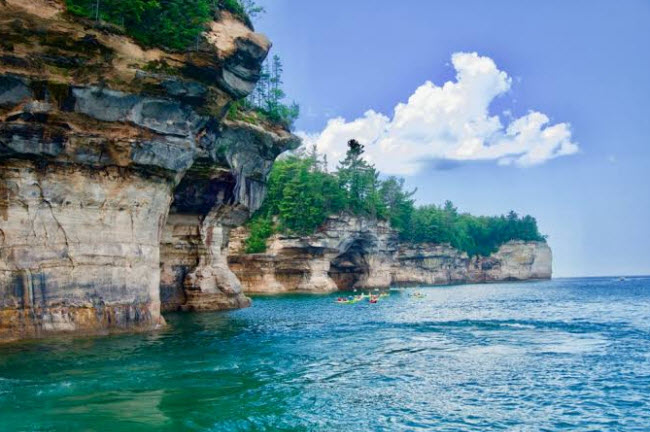
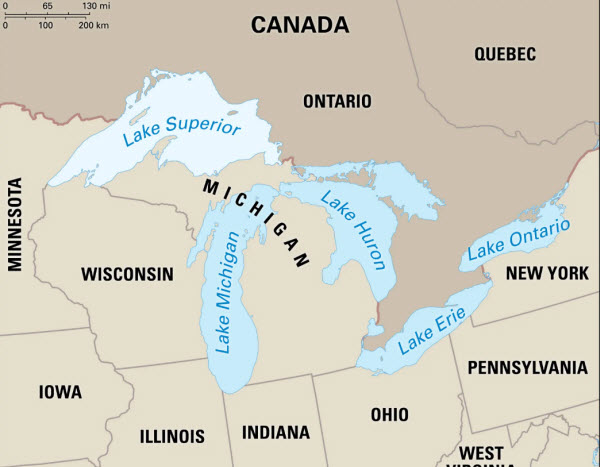
Lake Superior is one of the Great Lakes of North America and the largest freshwater lake in the world by surface area. It is also the northernmost, westernmost, and highest-elevation of the five Great Lakes. The lake is shared by Canada and the United States, with the Canadian province of Ontario bordering it to the north and east, while the U.S. states of Minnesota, Michigan, and Wisconsin lie along its western and southern shores. Lake Superior is so vast that it resembles an inland sea more than a traditional lake. It is also the third-largest freshwater lake in the world by volume, after Lake Baikal and Lake Tanganyika. Its waters flow into Lake Huron through the St. Marys River and then continue through the Great Lakes system toward the St. Lawrence River and the Atlantic Ocean, making it an important part of the waterway connecting the heart of North America to the ocean.
Geography
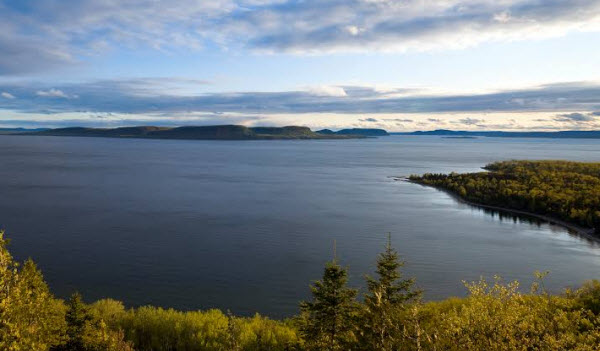
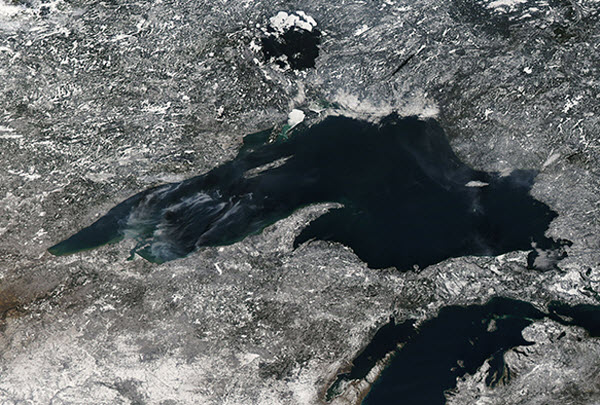
Lake Superior covers an area of approximately 82,100 square kilometers, with a maximum length of about 616 kilometers and a maximum width of around 260 kilometers. Its average depth is 147 meters, while its deepest point reaches approximately 406 meters. The lake contains around 12,070 cubic kilometers of water. Its shoreline stretches for about 2,783 kilometers, in addition to more than 1,600 kilometers of shoreline around its islands. Among the best-known islands are Isle Royale, the Apostle Islands, Michipicoten Island, Grand Island, and the Slate Islands. Several important cities and ports are located around the lake, including Duluth, Superior, Thunder Bay, Marquette, and Sault Ste. Marie. The Port of Duluth–Superior, located at the western end of the lake, is the farthest inland port accessible via the St. Lawrence Seaway. Lake Superior is fed by numerous rivers, while most of its outflow passes through the St. Marys River toward Lake Huron.
Geology
Lake Superior is a glacial lake, and much of its basin lies within the Midcontinent Rift, a geological formation created by enormous tectonic processes in the distant past. Its northern shores are lined with extremely ancient rocks dating back to the Precambrian era, while numerous ancient granite formations belonging to the Canadian Shield can be found along the Canadian coastline. The geological processes that shaped the region also contributed to the formation of mineral-rich deposits around the lake. As a result, the surrounding areas became well known for their deposits of copper, iron, silver, gold, and nickel, helping give rise to numerous mining communities that played an important role in the region’s history and settlement. The lake is also remarkable for its great depth. On July 30, 1985, American limnologist J. Val Klump reached the deepest known point in the lake during a scientific expedition.
History
The Lake Superior region was inhabited by numerous Indigenous peoples long before the arrival of Europeans. Among the most prominent were the Anishinaabe and Ojibwe, who relied on fishing and gathering and used birchbark canoes to travel across the region. They were preceded by other peoples, including the Dakota, Meskwaki, and Menominee. European exploration began in the 17th century, when French expeditions reached the lake through the Ottawa River and Lake Huron. The French called it Lac Supérieur, meaning “upper lake,” a name that was later anglicized to “Superior.” During the 18th century, the fur trade became a major economic activity in the region, with companies such as the Hudson’s Bay Company and the North West Company competing for control of the trade before merging in 1821. As mining and transportation developed, the lake became increasingly important. Steamships began operating on its waters during the 19th century, and Lake Superior eventually became one of the major routes for transporting iron ore, grain, raw materials, and manufactured goods throughout the Great Lakes system.
Economy
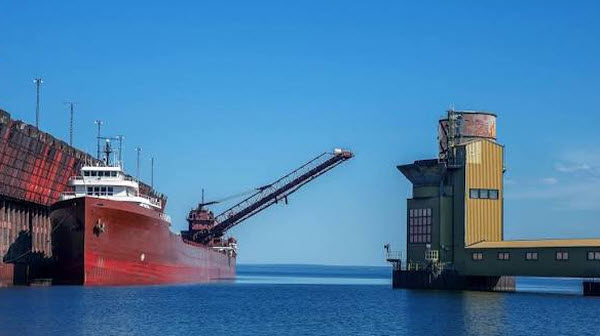
Lake Superior is one of North America’s most important inland waterways. It is used to transport iron ore, grain, and a wide range of raw materials and manufactured products aboard large cargo vessels that navigate the Great Lakes. The cities surrounding the lake have historically been closely connected to mining, metal processing, and shipping, particularly because the region is rich in iron, copper, gold, silver, and nickel. Tourism is also an important part of the modern regional economy. The lake’s vast coastline features wilderness areas, rocky cliffs, islands, parks, and nature reserves that attract tourists and outdoor enthusiasts. Among the best-known destinations are Isle Royale National Park, the Apostle Islands National Lakeshore, and Lake Superior Provincial Park, along with many other scenic areas. There is also a Lake Superior Circle Tour, a scenic road trip route that allows visitors to travel around large sections of the lake’s shoreline.
Environment
Lake Superior is known for its cold waters and is home to more than 80 species of fish, including native species such as lake trout, lake whitefish, lake sturgeon, yellow perch, and others. However, the lake’s ecosystem has been affected over the decades by the introduction of non-native species, including the sea lamprey and the Eurasian ruffe, as well as by overfishing of some fish populations. The lake is also being affected by climate change. Studies have indicated that its surface temperatures have risen over recent decades, while reduced ice cover in some years changes the amount of solar radiation reaching the water, potentially affecting the lake itself and the climate of the surrounding areas. Lake Superior is also known for lake-effect snow during the colder months, when cold air moving across its relatively warmer waters can contribute to heavy snowfall along nearby coastal areas.