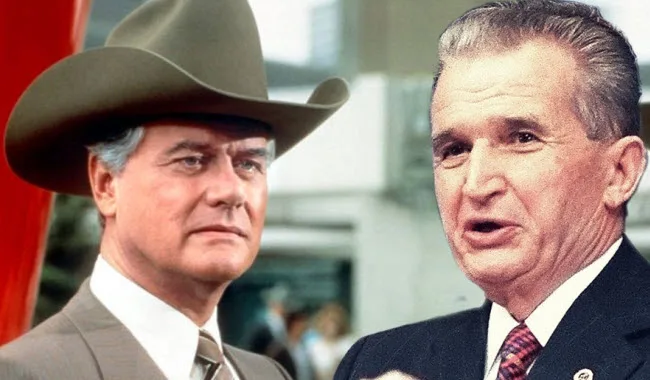
Wars between nations are not limited to military battles involving various types of weapons or intelligence conflicts in which spies gather information about their enemies. They also involve soft power in all its artistic, literary, and sporting forms. It would not be an exaggeration to say that soft power may be one of the most dangerous weapons used in warfare because it relies on ideas and influence to shape the way people think. If we look at the Cold War between the United States and the Soviet Union, we can see that this weapon was used effectively. Perhaps the famous television series Dallas is one of the clearest examples of this, as many people have considered it one of the factors that contributed to the American victory in the Cold War.
How the Famous TV Series Dallas Helped the Americans Win the Cold War
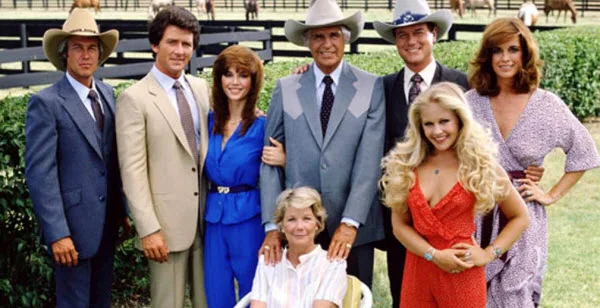
Dallas was an American television series broadcast in prime time on CBS in the United States from 1978 to 1991. It revolved around the wealthy and feuding Ewing family, who lived in Texas and owned an oil company while also raising cattle on the Southfork Ranch. The series initially focused on the marriage of Bobby Ewing and Pamela Barnes, whose families were bitter enemies. As the story developed, Bobby’s older brother, oil tycoon J.R. Ewing, played by actor Larry Hagman, became the central character, with his schemes and ruthless dealings becoming the show’s trademark.
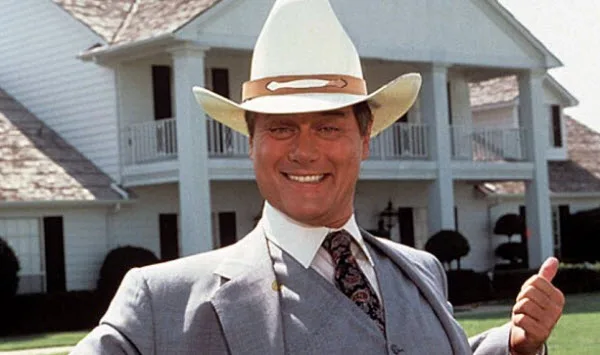
During its run, Dallas became enormously popular, not only among Americans who were tired of stagflation, but also among viewers in France, the Soviet Union, Romania under dictator Nicolae Ceaușescu, and more than 100 other countries. Viewers saw a corporate businessman who constantly manipulated politicians, cheated on his alcoholic wife, and plotted against his stubborn family, all supposedly as a consequence of the capitalist environment in which he lived. For communist countries, this seemed like the perfect television series for sending their citizens a message about the dangers of capitalism and the evils it could produce. With the Americans themselves acknowledging the show’s capitalist excesses, there appeared to be little reason to prevent it from being broadcast in Warsaw Pact countries. However, the message intended by communist officials did not reach viewers in quite the way they had expected.
How the Famous TV Series Dallas Helped the Americans Win the Cold War
When Dallas was broadcast in the United States, Romanian President Nicolae Ceaușescu allowed the series to be shown in Romania because he believed it carried a sufficiently strong anti-capitalist message. By the time he changed his mind, however, it was already too late. He eventually paid a heavy price when a revolution overthrew his regime and he was executed by firing squad. Romanian viewers had seen in the series a luxurious alternative to the communist system, which forced people to wait more than a decade to purchase a Romanian-made car, while capitalists could buy cars whenever they wished. They also saw the affluent lifestyle enjoyed by Americans compared with their own lives, which fueled a growing sense of frustration and resentment that their living conditions were unacceptable.
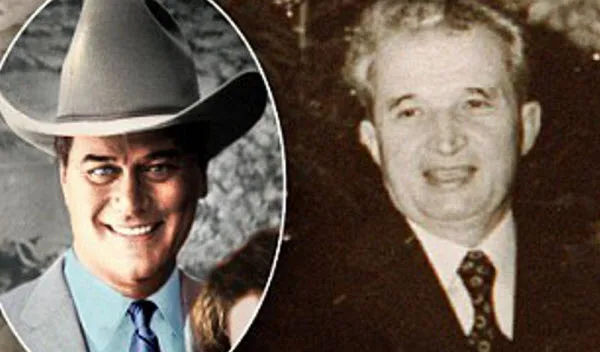
Following the fall of Romania’s communist regime, actor Larry Hagman stated that he believed Dallas had been directly or indirectly responsible for the collapse of the Soviet Empire. According to him, when people in communist countries watched the series, they looked at one another and said, “We don’t have any of these things.” Perhaps this encouraged them to question their leaders. Hagman may have had a point, because something similar had happened before when Joseph Stalin allowed the film The Grapes of Wrath to be shown in the Soviet Union in 1940 to highlight the hardships of life under capitalism. Yet when Russian audiences watched the final scenes of the Joad family’s journey westward in their battered cars, they were surprised to see that even poor people in the United States owned automobiles. The film therefore produced the opposite effect from what had been intended—something the Romanian dictator apparently failed to recognize when he approved the broadcast of Dallas.