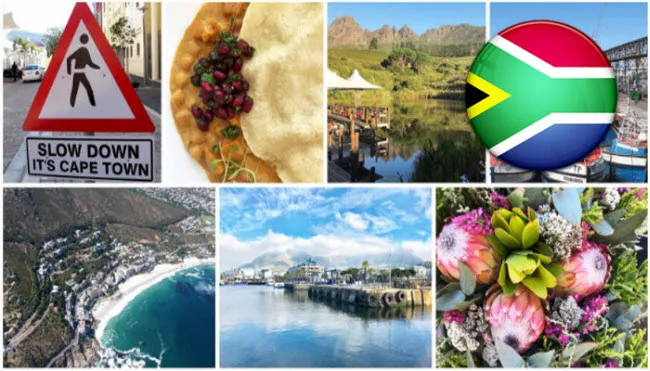
South Africa is a country located on the African continent with deep historical roots. Some of the oldest human remains in the fossil record have been found on its territory. In 1652, Dutch traders landed at its southern tip and established a stopping point along the spice route between the Netherlands and the Far East, founding the city of Cape Town. As European settlements expanded, the country’s immense underground wealth began to be exploited, particularly its diamonds and gold. This encouraged large numbers of Europeans to migrate there in search of wealth and to exploit these resources. In 1879, a war broke out between them and the indigenous population, leading to the incorporation of the lands of the Zulu Kingdom into the British Empire. The Afrikaner republics were later incorporated as well after their defeat in the Second Boer War between 1899 and 1902. Nevertheless, the British and Afrikaners jointly governed the country beginning in 1910 under the Union of South Africa, which became a republic in 1961 following a referendum in which only whites participated. This was a period when apartheid dominated the country, favoring the white minority at the expense of the black majority. As a result, many black political activists fought against the system, most notably leader Nelson Mandela, who spent decades in prison alongside his fellow activists. Eventually, following internal protests and uprisings, as well as boycotts imposed by some Western countries and institutions, the ruling system gave in and entered negotiations for a peaceful transition to majority rule, which finally succeeded in the mid-1990s.
Geography
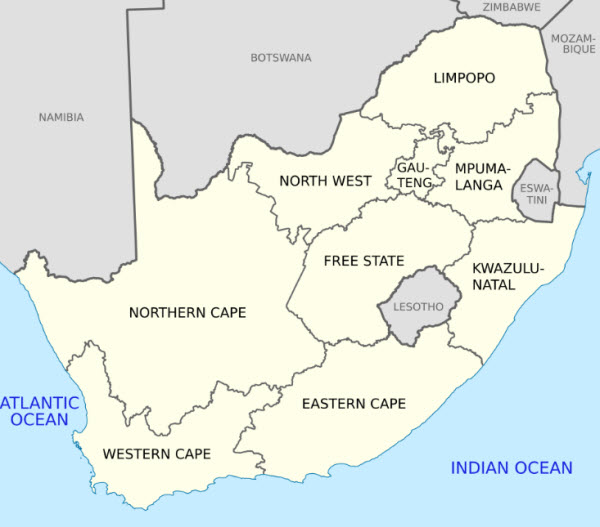
Location: South Africa lies at the southern tip of the African continent, with coastlines along the Indian Ocean to the east and the South Atlantic Ocean to the west.
Coordinates: 29 degrees south and 24 degrees east.
Area: 1,219,090 square kilometers, ranking 26th in the world by area. Its size is slightly less than twice that of the state of Texas.
Borders: South Africa has 5,244 kilometers of land borders shared with six countries: Botswana, 1,969 km; Lesotho, 1,106 km; Mozambique, 496 km; Namibia, 1,005 km; Eswatini, 438 km; and Zimbabwe, 230 km.
Climate: Mostly semi-arid across much of the country and subtropical along the eastern coast, with sunny days and cool nights.
Terrain: South Africa consists of a vast interior plateau bordered by rugged hills and a narrow coastal plain.
Elevation: The average elevation of South Africa is 1,034 meters above sea level. The lowest point is the Atlantic Ocean at 0 meters, while the highest point is Mount Njesuthi, rising to 3,408 meters.
Natural resources: South Africa has abundant natural resources, including gold, chromium, antimony, coal, iron ore, manganese, nickel, phosphates, tin, rare earth elements, uranium, diamonds, platinum, copper, vanadium, salt and natural gas.
Land use: Approximately 79.4% of South Africa’s total land area is used for agriculture.
Population distribution: The population is concentrated along the southern and southeastern coasts and in the interior around Pretoria. The eastern half of the country is more densely populated than the west.
Population and Society in South Africa
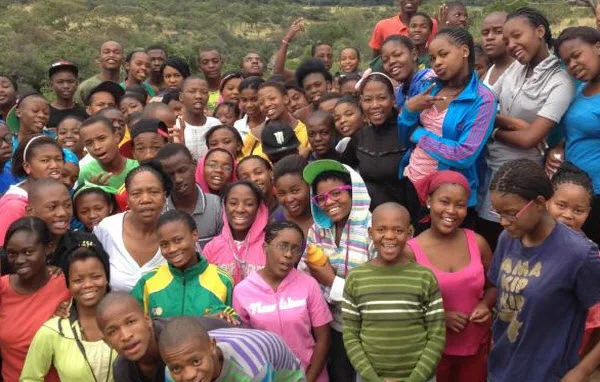
South Africa had a population of 56,463,617 according to the latest statistics issued in 2020.
Ethnic groups: Black Africans 80.9%, Coloured 8.8%, whites 7.8%, and Indians and Asians 2.5% (2018 estimates).
Languages: IsiZulu (official) 24.7%, IsiXhosa (official) 15.6%, Afrikaans (official) 12.1%, Sepedi (official) 9.8%, Setswana (official) 8.9%, English (official) 8.4%, Sesotho (official) 8%, Xitsonga (official) 4%, siSwati (official) 2.6%, Tshivenda (official) 2.5%, isiNdebele (official) 1.6%, and other languages, including Khoi, Nama and San languages, 1.9% (2017 estimates).
Religions: South Africa is home to several religions, including Christians at 86%, ancestral religions, whether tribal, pagan or other traditional African religions, at 5.4%, Muslims at 1.9%, other religions at 1.5%, and people with no religion at 5.2% (2015 estimates).
Age structure: Ages 0–14: 27.94% (males 7,894,742 / females 7,883,266); ages 15–24: 16.8% (males 4,680,587 / females 4,804,337); ages 25–54: 42.37% (males 12,099,441 / females 11,825,193); ages 55–64: 6.8% (males 1,782,902 / females 2,056,988); and ages 65 and over: 6.09% (males 1,443,956 / females 1,992,205) (2020 estimates).
Population growth rate: 0.97% (2020 estimate).
The State
Official name: Republic of South Africa. The name is often shortened to South Africa, and the country code is ZA. The country was given this name because of its location on the African continent.
Government type: Parliamentary republic.
Capital: Pretoria is the administrative capital, Cape Town is the legislative capital, and Bloemfontein is the judicial capital. Pretoria was named after Marthinus Pretorius, the father of the Voortrekker leader, as a tribute to him. Cape Town’s name reflects its location near the Cape of Good Hope, while Bloemfontein is a combination of the Dutch words “Bloem” (flower) and “Fontein” (spring), meaning “fountain of flowers.”
Local time: GMT+2.
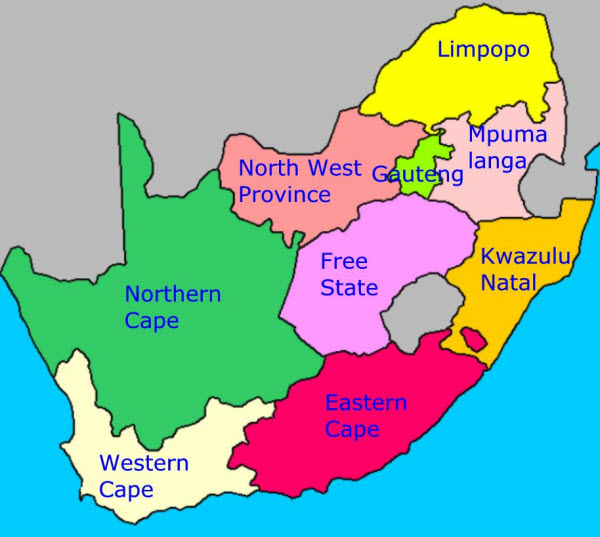
Administrative divisions: South Africa consists of nine provinces: Eastern Cape, Free State, Gauteng, KwaZulu-Natal, Limpopo, Mpumalanga, Northern Cape, North West and Western Cape.
Independence: May 31, 1910 (Union of South Africa, formed from four British colonies: Cape, Natal, Transvaal and Orange Free State); August 22, 1934 (Union Act status); May 31, 1961 (declaration of the republic); April 27, 1994 (majority rule).
Legal system: South Africa’s common-law system is based on a mixture of Roman-Dutch civil law, English common law and customary law.
Citizenship: South Africans obtain full citizenship by descent if both parents, or one of them, holds South African citizenship, or through residence in the country for a period of at least one year. Citizenship is not granted simply by being born on South African territory, and South Africa allows dual citizenship.
Executive branch: The president is indirectly elected by the National Assembly for a five-year term and is eligible for a second term. The president is also head of government and appoints the ministers.
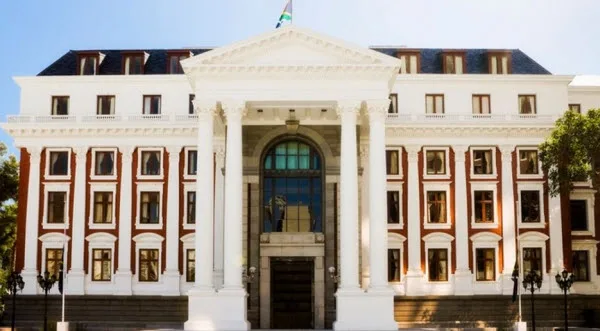
Legislative branch: The South African Parliament consists of two chambers. The first is the National Council of Provinces, which has 90 seats and 10 delegations appointed by the nine provincial legislatures. Members serve five-year terms. The council has special powers to protect regional interests, including the protection of cultural and linguistic traditions among ethnic minorities. The second chamber is the National Assembly, consisting of 400 seats. Members are directly elected in multi-member constituencies through proportional representation and serve five-year terms.
Judicial branch: The judiciary consists of a number of courts, headed by the Supreme Court of Appeal, which consists of the Chief Justice, the Deputy Chief Justice and 21 judges. They are appointed by the president after consultation with the Judicial Service Commission, a body consisting of 23 members chaired by the Chief Justice and including other judges, judicial officials, members of Parliament, lawyers and others. Judges remain in office until they are removed from active service under an Act of Parliament. There is also the Constitutional Court, consisting of a Chief Justice, a Deputy Chief Justice and nine judges, also appointed by the president after consultation with the Judicial Service Commission, the Speaker of the National Assembly and other Constitutional Court judges. Constitutional Court judges serve for 12-year non-renewable terms or until reaching the age of 70. In addition, there are lower courts, including High Courts, Magistrates’ Courts, Labour Courts and Land Claims Courts.
Political parties: South Africa’s political life includes a number of parties, most notably the African Christian Democratic Party, African National Congress, African People’s Convention, Congress of the People, Democratic Alliance, Economic Freedom Fighters, Inkatha Freedom Party, National Freedom Party, United Christian Democratic Party and United Democratic Movement.
Flag description: The South African flag consists of two equal-width horizontal bands, red on top and blue on the bottom, separated by a central green band that forms a horizontal Y-shape, with its arms extending toward the hoist-side corners. The Y encloses a black isosceles triangle, whose sides are separated from the green by narrow yellow bands. The red and blue bands are separated from the green band and its arms by narrow white lines. The colors of the flag have no official symbolism, but the Y is said to represent the convergence of the country’s diverse elements and their movement forward in unity. The black, yellow and green colors are those of the African National Congress, while the red, white and blue reflect colors found on the flags of the Netherlands and the United Kingdom, which ruled South Africa during the colonial era.
National symbols: The springbok, a species of antelope, and the King Protea flower. The national colors are red, green, blue, yellow, black and white.
Economy
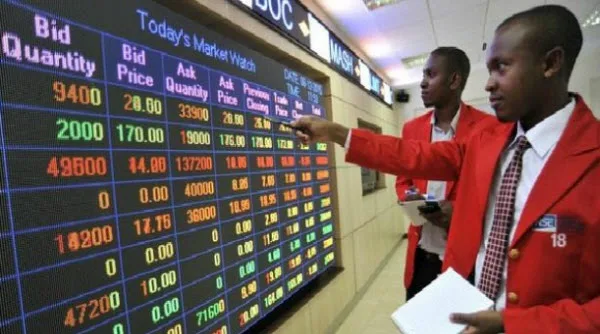
South Africa is an emerging middle-income market with abundant natural resources. It has well-developed financial, legal, communications, energy and transportation sectors, as well as the largest stock exchange in Africa and one of the world’s top 20 markets. However, economic growth slowed in recent years to an estimated 0.7% in 2017. Unemployment, poverty and inequality remain among the highest rates in the world. Unemployment is considered the country’s greatest challenge, affecting approximately 27% of the labor force and rising significantly among young black South Africans. South Africa’s economic policies focus on controlling inflation, yet the country faces constraints that limit economic growth, including a shortage of skills, declining global competitiveness and frequent work stoppages caused by strikes.
Gross domestic product: $687.3 billion (2019 estimate).
Agricultural and animal products: Corn, wheat, sugar cane, fruits, vegetables, beef, poultry, sheep meat, wool and dairy products.
Industries: Mining, including being the world’s largest producer of platinum, gold and chromium; automobile assembly; metalworking; machinery; textiles; iron and steel; chemicals; fertilizers; food processing; and commercial ship repair.
Budget: Revenues: $92.86 billion (2017 estimate). Expenditures: $108.3 billion (2017 estimate).
Exports: $123.86 billion (2019 estimate), including gold, diamonds, platinum, minerals, machinery and equipment.
Imports: $131.72 billion (2019 estimate), including machinery and equipment, chemicals, petroleum products, scientific instruments and food products.
Foreign exchange reserves: $54.47 billion (2021 estimate).
External debt: $156.3 billion (2016 estimate).
Local currency: South African rand.
Communications in South Africa
Fixed telephone lines: 1,934,778 subscribers.
Mobile phone lines: 92,600,942 subscribers.
Country calling code: +27.
Broadcast media: The South African Broadcasting Corporation (SABC) operates four television stations, three of which are free-to-air and one of which is encrypted. There is also a private station accessible to more than half of the population, while multi-subscription television services offer a mix of local and international channels. South Africa also has a mixture of public and private radio stations at national, regional and local levels. These include the state-owned SABC radio network, which is subject to oversight despite being nominally independent. It operates 18 stations, one for each of the 11 official languages, as well as four community stations and three commercial stations, in addition to more than 100 other stations serving rural areas.
Internet code: .za
Internet users: 31,107,064 users, representing 56.17% of the total population.
Transport
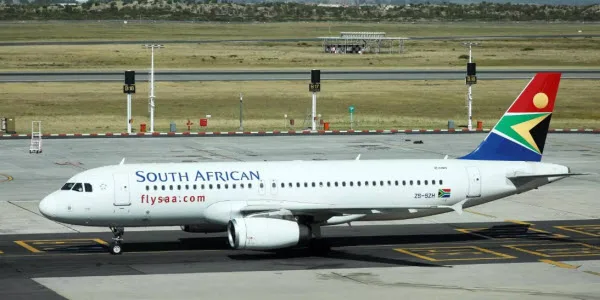
National air transport system: South Africa has 17 registered air carriers with a total of 243 aircraft. Annual passenger traffic reaches 23.9 million passengers, while annual freight traffic reaches 716.2 million ton-kilometers.
Airports: 407 registered airports (2013 estimate).
Heliports: None.
Pipelines: 94 km of pipelines for transporting condensates, 1,293 km of gas pipelines, 992 km of oil pipelines and 1,460 km of pipelines for transporting refined petroleum products (2013 estimates).
Railways: 20,986 kilometers.
Road network: 750,000 kilometers, ranking 10th in the world.
Ports: South Africa has five major ports, a container port and a natural gas terminal.
The Military in South Africa
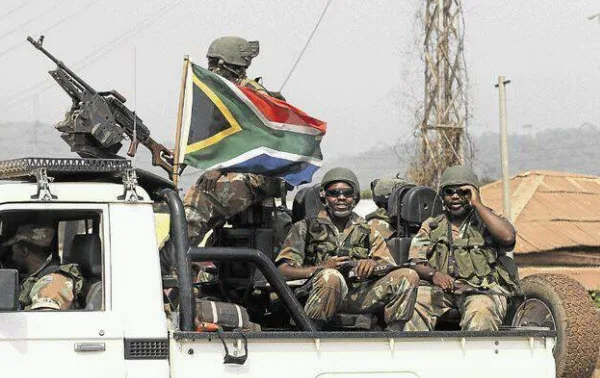
The South African Armed Forces consist of several branches, including the South African National Defence Force, the army, including reserve forces, the South African Navy, the Air Force and Military Health Service (2019 estimates).
Military expenditure: 1% of GDP.
Military and security personnel: The South African Armed Forces have approximately 75,000 active-duty personnel, consisting of 40,000 army personnel, 7,000 naval personnel, 10,000 air force personnel, 8,000 military health personnel and 10,000 personnel in other services (2020 estimates).
Military equipment: South Africa’s military inventory consists of a mixture of domestically produced and imported equipment. The country’s defense industry produces most of the army’s major weapon systems, some of them jointly with foreign companies. The air force and navy inventories include a mixture of weapon systems from Europe, Israel and the United States. Since 2010, Sweden has become the largest arms supplier to the South African armed forces (2019 estimate).
Military service age: 18–26 for voluntary military service. Women are eligible to serve in non-combat roles, and military service lasts two years (2019 estimate).