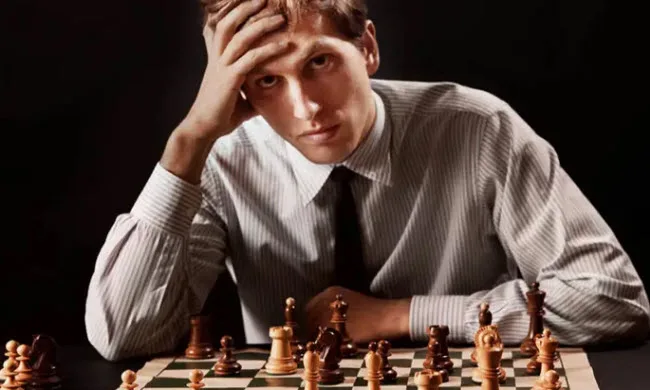
In the early 1970s, it seemed as though the United States had found an unexpected weapon in its struggle against the Soviet Union during the Cold War: a teenager named Bobby Fischer. For years, Fischer would become one of the greatest legends of chess, a game that had been dominated for decades by Soviet players. The Soviets used their dominance in chess as part of their propaganda, presenting it as evidence of their intellectual superiority over the West. However, everything changed dramatically in 1972, when Bobby Fischer defeated the greatest chess player of the time, Soviet world champion Boris Spassky. The young American suddenly became the center of worldwide attention, and chess enthusiasts said that there had never been a player quite like him. Some described him as a computer with no obvious weaknesses, while a Russian grandmaster once compared him to Achilles without an Achilles’ heel. His strategies and playing techniques are still studied today. Yet despite his legendary status, Fischer’s private life was deeply troubled, and it seemed that his mind was almost as fragile as it was brilliant.
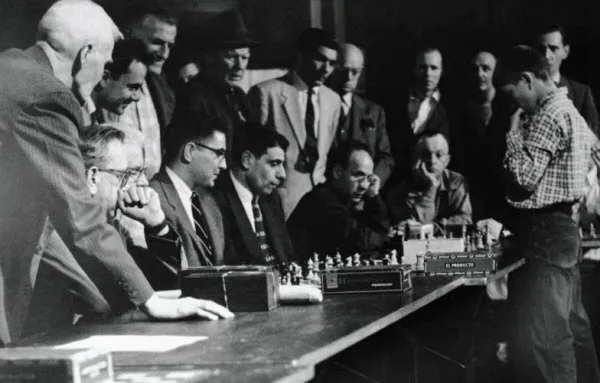
Bobby Fischer was born in 1943 and was the son of two extraordinarily intelligent people. His mother, Regina Fischer, was Jewish, spoke six languages fluently, and earned a medical degree. It is believed that Bobby was the result of an affair between his mother, who was married to Hans Gerhardt Fischer at the time of his birth, and a prominent Hungarian Jewish scientist named Paul Nemenyi. Nemenyi wrote a textbook on mechanics and worked for a time with Hans, the son of scientist Albert Einstein, in his hydrology laboratory at the University of Iowa. Despite his extraordinary intelligence, Nemenyi suffered from mental health problems, seemingly illustrating the old saying that there is only a very thin line between genius and madness. In 1945, Regina separated from Fischer and was forced to raise her newborn son and her daughter, Joan Fischer, on her own.
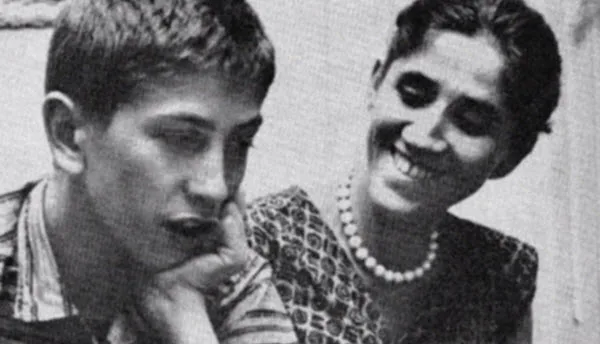
As he grew up in Brooklyn, Bobby Fischer began playing chess at the age of six. His natural abilities and remarkable concentration eventually enabled him to enter his first tournament when he was only nine. By the age of eleven, he was a regular at chess clubs in New York, and chess had become his entire life. He was determined to become world chess champion. His childhood friend Allen Kaufman described him as a “chess sponge”: he would walk into a room filled with players, search for any chess books or magazines he could find, then sit down and absorb their contents one after another.
Bobby Fischer quickly began dominating American chess. At thirteen, he became the United States junior champion and defeated some of the country’s strongest players at the U.S. Open in the same year. He also played a remarkable game against international master Donald Byrne, which established Fischer for the first time as one of the greats. He won the game by sacrificing his queen in order to launch an attack against Byrne, a victory that was praised as one of the greatest games ever produced by a chess prodigy. His rise continued. At fourteen, he became the youngest U.S. champion in history, and at fifteen, he strengthened his reputation as the greatest chess prodigy the world had ever seen after becoming the youngest grandmaster in history. Now he had to face the strongest minds from other countries, especially those of the Soviet Union.
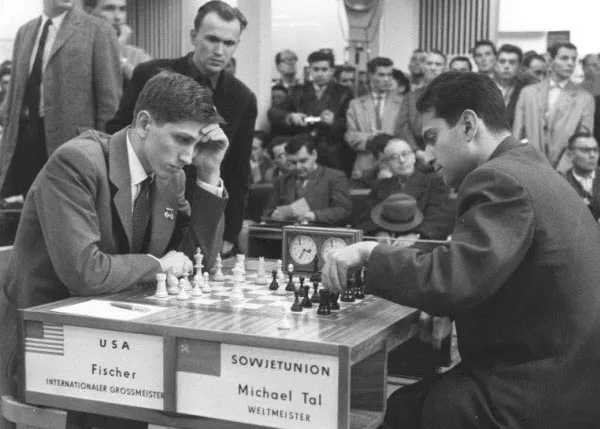
As the stage was being set for a confrontation with the Soviets, who were among the world’s best chess players at the time, Fischer’s mother, who had always supported her son’s ambitions, wrote to Soviet leader Nikita Khrushchev in 1958 and asked him to host her son. Khrushchev accepted the request and invited Bobby Fischer to compete in the World Festival of Youth and Students. Unfortunately, the invitation arrived too late, and his mother could not afford the travel tickets. Nevertheless, Fischer’s wish to play in the Soviet Union came true the following year when the producers of a television program gave him two round-trip tickets to Russia.
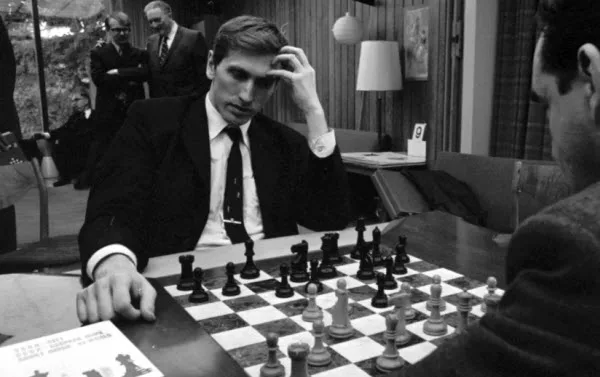
In Moscow, Fischer demanded to be taken to the Central Chess Club, where he faced two young Soviet masters and defeated them in every game. But he was not satisfied with simply defeating players his own age. His sights were set on a much greater prize: a match against world champion Mikhail Botvinnik. The Soviets refused, which angered him. This was the first time he openly attacked someone for refusing to meet his demands. In English, he told his hosts that he was tired of “these Russian pigs.” The situation became even worse when the Soviets intercepted a postcard he had sent to New York in which he wrote that he disliked Russian hospitality and the Russian people themselves. As a result, a decision was made to deny him any future visas to the country.
Fischer left Erasmus High School at the age of sixteen to concentrate on chess full-time. Everything else was a distraction to him. When his mother moved away from her apartment to pursue medical training in Washington, D.C., Fischer made it clear that he was happier without her. In an interview two years later, he said: “She and I don’t get along. She interferes in my affairs, and I don’t like people interfering in my affairs, so I had to get rid of her.” Bobby Fischer became increasingly isolated. Although his chess abilities continued to grow stronger, his mental health slowly deteriorated. He began attacking Jews and said in a 1962 interview that there were too many Jews in chess and that they had lowered the standard of the game. He also criticized their appearance and added that women should not be allowed into chess clubs because, in his view, their presence turned the clubs into mental institutions. He claimed that women were weak and stupid compared with men and should not play chess because they were like beginners and lost every game against men.
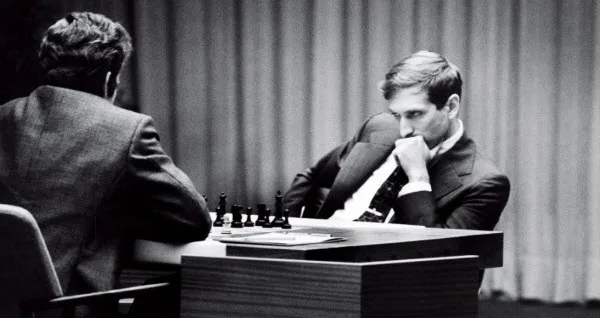
Between 1957 and 1967, Bobby Fischer won eight U.S. Championships and achieved the only perfect score in the tournament’s history, 11–0, during the 1963–1964 championship. But as his success grew, so did his arrogance and hostility toward Russians and Jews, despite the praise he received from Soviet players. Russian grandmaster Alexander Kotov acknowledged Fischer’s talent, saying that his flawless style of play at nineteen was extremely rare. In contrast, Fischer published an article in 1962 accusing three leading Soviet players of agreeing to draw their games against one another before a tournament in order to manipulate the results. The accusation was controversial at the time, although it is now widely believed to have been true. Fischer became determined to take revenge.
Eight years later, he defeated one of those Soviet grandmasters, Tigran Petrosian, along with other Soviet players, in the 1970 USSR vs. Rest of the World match. Within weeks, Fischer did it again at the unofficial world championship in Yugoslavia.
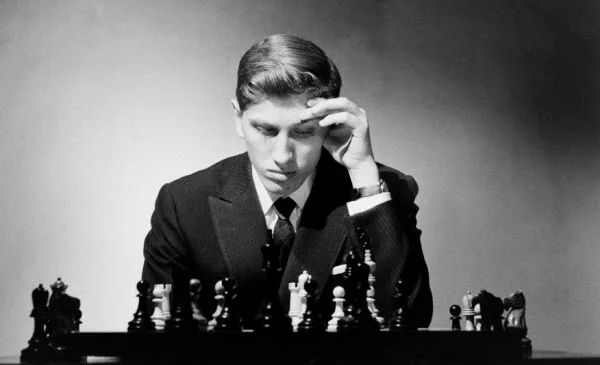
Over the following year, Fischer eliminated his foreign rivals, including Soviet grandmaster Mark Taimanov. Taimanov was confident that he could defeat Fischer after studying a Russian dossier compiled on Fischer’s chess strategy. Yet even Taimanov suffered a crushing 6–0 defeat, the most devastating loss in top-level competition since 1876. Fischer’s only major defeat during this period came against the 36-year-old world champion Boris Spassky at the 19th Chess Olympiad in Siegen, Germany.
But Fischer’s extraordinary winning streak during the following year gave him another opportunity to challenge Spassky for the world championship. After Petrosian failed twice to defeat Fischer, the Soviet Union feared that its reputation in chess was in danger. Nevertheless, the Soviets remained confident that their world champion, Boris Spassky, could defeat the American prodigy.
The match between Fischer and Spassky came to represent the Cold War itself. Their chessboard became a battlefield of intellect, symbolizing in many ways the struggle between the two superpowers, where mental warfare replaced military force. The greatest minds of both countries were ready to fight for the world chess championship in 1972 in Reykjavik, Iceland, as communism and democracy battled for supremacy over the chessboard.
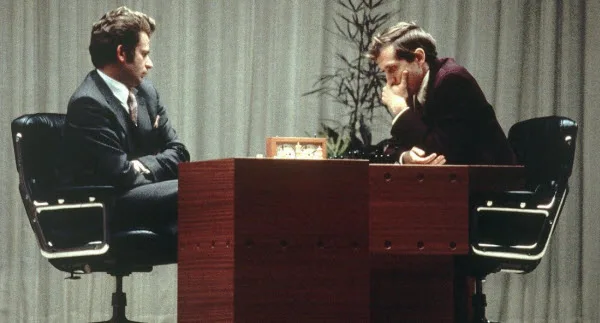
As much as Bobby Fischer wanted to humiliate the Soviets, he was even more concerned that the tournament organizers would not meet his demands. He nearly withdrew because he considered the prize money too small, but eventually agreed to play after the prize was raised to $250,000 ($1.4 million in today’s money), making it the largest prize ever offered at that point. He also received a phone call from U.S. Secretary of State Henry Kissinger, who persuaded him to participate.
Fischer continued making demands. He asked organizers to remove the front rows of seats, provide him with a new chessboard, and change the lighting in the playing hall. The organizers granted all his requests. The first game began on July 11, 1972, but Fischer’s start was disappointing because he made a mistake that allowed Spassky to win.
Following the defeat, Fischer blamed the cameras, claiming that he could hear them and that they were breaking his concentration. The organizers initially refused to remove them. In protest, Fischer failed to appear for the second game, giving Spassky a 2–0 lead. Fischer continued to refuse to play unless the cameras were removed. He also demanded that the match be moved from the main tournament hall to a small back room normally used for table tennis.
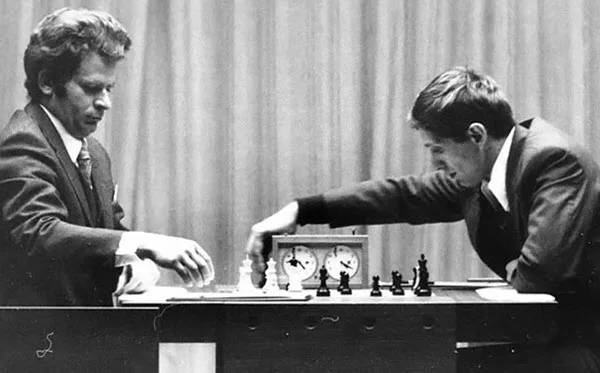
Eventually, the organizers gave in to his demands. From the third game onward, Bobby Fischer dominated Spassky, eventually winning six and a half of his next eight games. The turnaround was so astonishing that Soviet officials began wondering whether the CIA was poisoning Spassky. His orange juice was analyzed, his chair and the lighting were examined, and all kinds of beams and radiation that might enter the room were measured. Nothing was found.
Spassky soon regained some control in Game 11, which became the last game Fischer ever lost in the match. He then drew the next seven games, and finally Bobby Fischer secured a historic victory for the United States, ending a 24-year period in which the Soviet Union had dominated the world chess championship.
Bobby Fischer had destroyed the image of Soviet intellectual superiority. Millions of Americans followed the match on television in their homes and through shop windows, while the games were also broadcast on a giant television screen in Times Square. Yet Fischer’s glory did not last long. As soon as the match ended, he boarded a plane home, gave no speeches, signed no autographs, rejected sponsorship offers worth millions of dollars, and withdrew from public life.
He lived in isolation, occasionally appearing on radio programs from Hungary and the Philippines, where he expressed his hatred of Jews and American values. For the next twenty years, Bobby Fischer played no competitive chess. When asked to defend his world title in 1975, he responded with a list of 179 demands. When none of them was accepted, he refused to play and was stripped of his title without moving a single chess piece.
Read also: The Story of Judit Polgár, the Greatest Female Chess Player of All Time
By 1992, Bobby Fischer briefly regained some of his former glory after defeating Spassky in Yugoslavia. As a result, he was accused of violating the economic sanctions imposed on Yugoslavia and was forced to live abroad or face arrest if he returned to the United States.
During his exile, his mother and sister died, and he was unable to return home to attend their funerals. When the September 11, 2001 attacks occurred, Fischer praised what had happened and said, “I want to see the United States wiped out.”
He was arrested in 2004 after traveling to Japan using a U.S. passport that had been revoked. In 2005, he applied for and received full Icelandic citizenship. He spent the final years of his life living in obscurity in Iceland, becoming increasingly detached from reality. Some believed he had Asperger syndrome, while others thought he suffered from a personality disorder and perhaps inherited his mental instability through the genes of his biological father.
Whatever the cause of his troubled mind, Bobby Fischer eventually died of kidney failure in 2008 at the age of 64 — an ironic number, considering that a chessboard contains exactly 64 squares.